![]() |
![]() |
![]() |
||
John W. Oller, Jr., Ph.D. Hawthorne Regents Professor* Department of Communicative Disorders University of Louisiana at Lafayette P. O. Box 43170 Lafayette, LA 70504-3170 Phone 337-962-4649 joller@louisiana.edu |
Why we wrote the three books on this web page. Books are never projects that come together on their own. They are made by teams of committed individuals and the three on this web page are no exception.
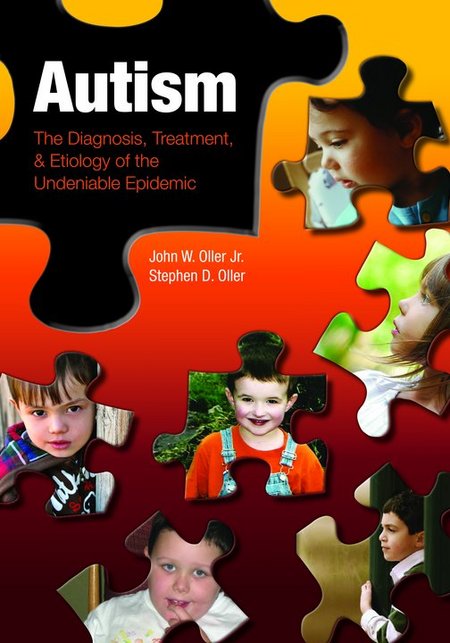
How do we know the autism epidemic is real. There are two streams of work on autism and related disorders. One says that there is a genuine growing epidemic and the other says the whole idea may be an illusion. What to believe? Why the conflict?
What about vaccines and their components? Is it true, as claimed by the CDC in its public statements that there is no correlation between the toxins and disease agents in vaccines, or their interactions, and the rising incidence of the autism diagnosis?
What's on the Autism DVD that goes with the book? This is a brief, informal tutorial for teachers and students.
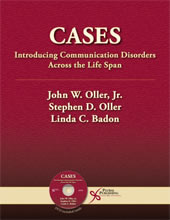
What's on the DVD for the Cases book? This is a tutorial for the DVD that accompanies the Cases book.
Relevant studies of biochemistry, especially in human and animal toxicology studies and in systematic research on medical interventions, show what the main causal factors are and how they can be corrected. In this book, we present and explain the healing cycle that has worked in hundreds of cases and that needs to be applied in one way or another to all of them. Health is not the great mystery that some seem to pretend that it is: we need to avoid toxins, consume a nutritious diet, rest well regularly, and exercise vigorously. Beyond that we may also need to fight off or counter attack disease agents, parasites, and fungi, and possibly even to chemically remove toxins already consumed. All the while we need to monitor progress with reasonable and valid measurement and assessment procedures. Communication is critical from top to bottom. We show why and we describe the basis for the paradigm shift in the health sciences that is already underway. As independent researchers, we aim to contribute to the needed changes that must take place from the grass roots upward.
Oller, J. W., Jr., Oller, S. D., & Badon, L. C. (2010). Cases: Introducing communication disorders across the life span. San Diego, CA: Plural Publishing, Inc. This book reclassifies communication disorders across the board within the framework of a general theory of signs. It accomplishes at an introductory level what some said was too difficult for Ph.D. level students in communication disorders. Well, it's not too difficult at all and certainly not too hard for undergraduate students to understand and use. We show why the reclassification is necessary and we illustrate it in a narrative way with real life cases that rivet attention and motivate comprehension. The coverage is encyclopedic and yet students want to know more and more. It's the entry point for many professionals who will learn more as they work through this material than any of the practitioners trained at graduate levels in prior years. No brag, just fact. The research here is cutting edge and the theory is consistent, simple, and comprehensive. The real life stories are true and presented in ways that will make you laugh, cry, and want to do something about the disorders that you experience through the cases. Click here to read what users are saying about this book.
Oller, J. W., Jr. & Chen, Liang. (2007). Episodic organization in discourse and valid measurement in the sciences. Journal of Quantitative Linguistics, 14, 127-144. This paper sums up logicomathematical arguments and empirical research showing why piecemeal approaches to language analysis and to any kind of measurement in the sciences, approaches that neglect a dynamic and integrative systems account, are certain to fail. They are doomed to an incompleteness that cannot be remedied without taking abstract discursive phenomena and interactions at a distance into account. This same point applies in biochemistry and genetics as strongly as it does in logic and linguistics. The implications for measurement theory are completely general and the logicomathematical basis, we believe, will stand the closest scrutiny.
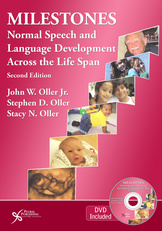
Oller, J. W., Jr., Oller, S. D., & Badon, L. C. (2006). Milestones: Normal speech and language development across the life span. San Diego, CA: Plural Publishing, Inc. (Click here to see what our students are saying about this book. This text contains theoretical and empirical advances that are presented coherently at an introductory level here. It provides a solid, necessary, foundation for understanding communication disorders. It is grounded in empirical research and sustained by a logical and factual presentation of the normal sequence of steps requisite to developing the whole sign hierarchy from sensation, to movement, to language and to all that language makes accessible in human experience, communication, and understanding. It shows how the human language capacity is normally fleshed out and why it is crucial to the full development of so-called "nonverbal" abilities as well as the kinds of intelligence and creative expression that are distinctly social and human.
Oller was the principal organizer of Autism07 held at the UL Lafayette Cajundome Convention Center April 12-14, 2007. Click here to see what participants from all categories had to say about that conference. A grant for this purpose of $30,000 from Sertoma Club of Lafayette was funded in spring 2006 to organize the Sertoma International Conference on Autism Spectrum Disorders (Autism07) matched in part by the University of Louisiana at Lafayette ($2,000) and the Tourism Bureau of Lafayette ($1,000) in addition to contributions from numerous other persons (click here to see a complete list of contributors). Clearly, toxicity from pesticides, disease agents, medicines, and dentistry in particular certainly are among the causal factors for the present autism epidemic. The JAMA defense of mercury in dental amalgam for children notwithstanding. Click here to read a critique of that often cited study. If mercury is not safe to hold in your hand, or to include in topical disinfectants, is it safe to wear in your mouth or put in living tissues? The interactions between toxins and disease agents are causal elements in the various epidemics of chronic diseases including autism. (See the book on Autism cited above.)
Matching grant of $17,260 from Sertoma International and the Sertoma Club of Lafayette to conduct research on medical protocols for the treatment of autism spectrum disorders (funded April 2007).
CODI 601 is the foundational course for the ALSS PhD Program as approved by the Board of Regents of the State of Louisiana based on the document presented by Oller and approved in June 2001; can be offered on distinct topics as well.
CODI 118 is an introduction to communication disorders based on Cases: Introducing communication disorders across the life span. San Diego, CA: Plural Publishing, Inc.
CODI 274 is an introduction to normal speech and language development based on Milestones: Normal speech and language development across the life span. San Diego, CA: Plural Publishing, Inc.
CODI 497/590 seminar in autism spectrum disorders dealing with diagnosis, treatment, and the etiology of the current epidemic.
*Any errors and the ideas expressed
here are solely those of the webmaster of this site. Contact joller@louisiana.edu.
Copyright ©2000-2010
by the University of Louisiana